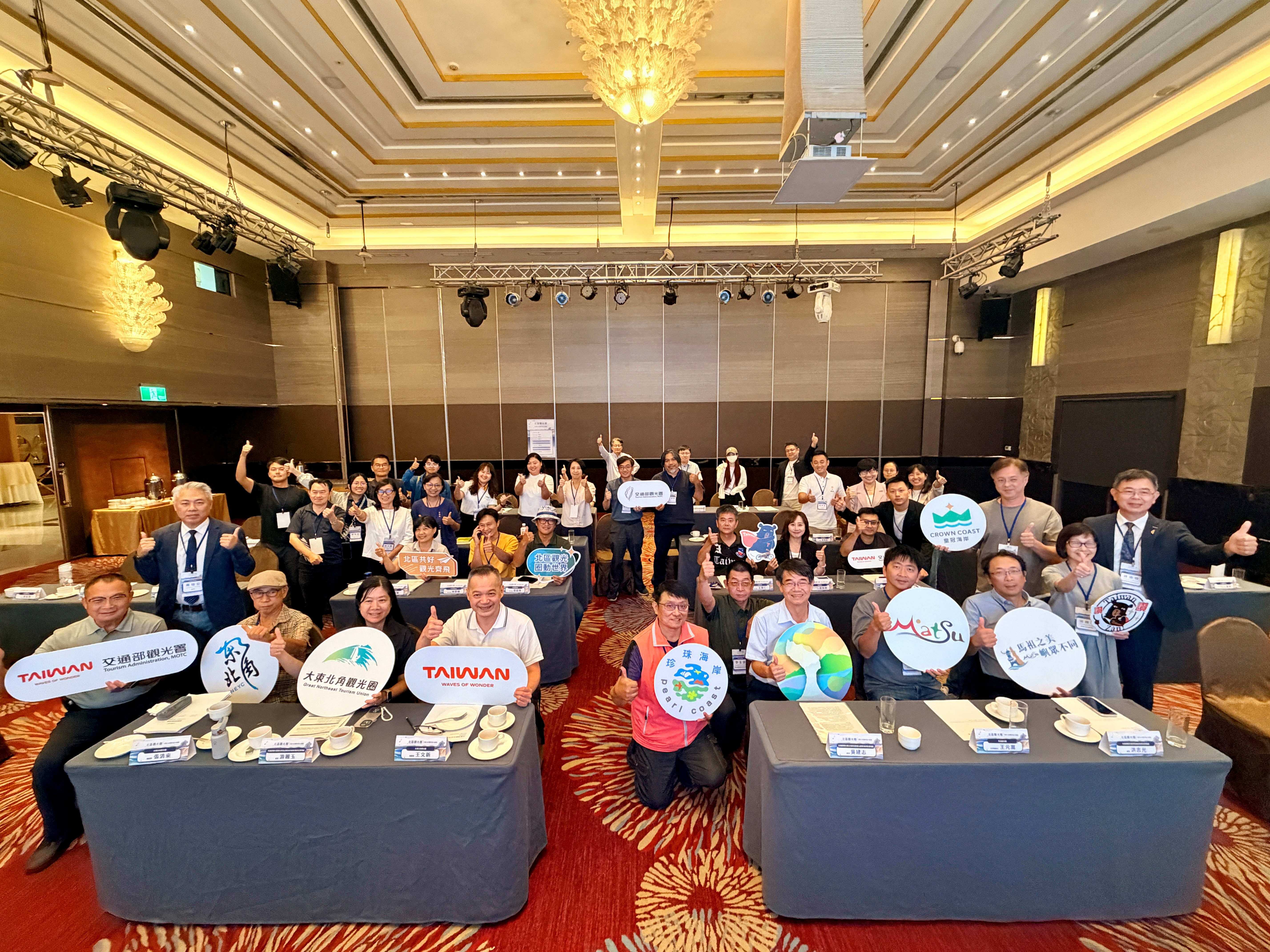
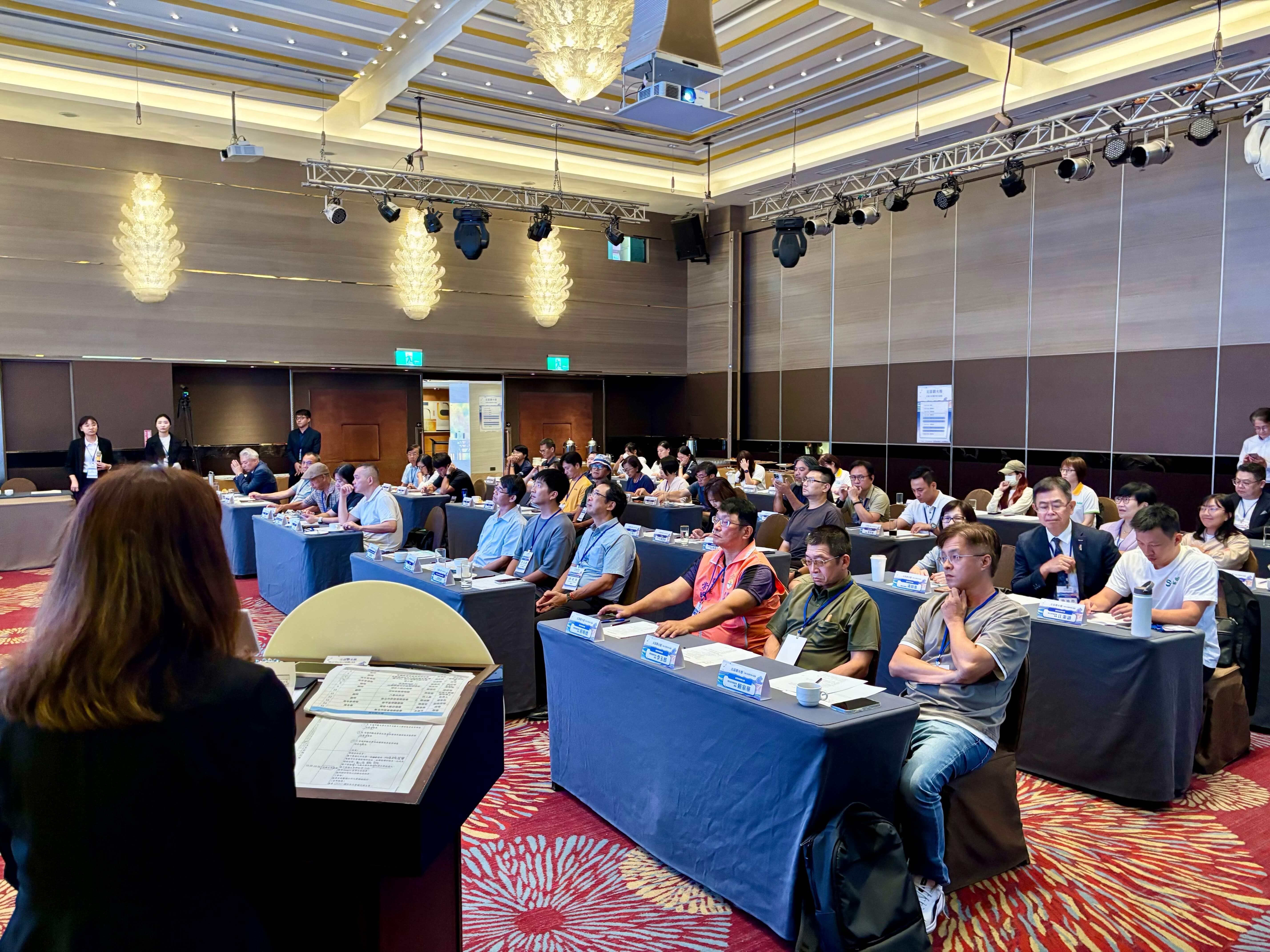
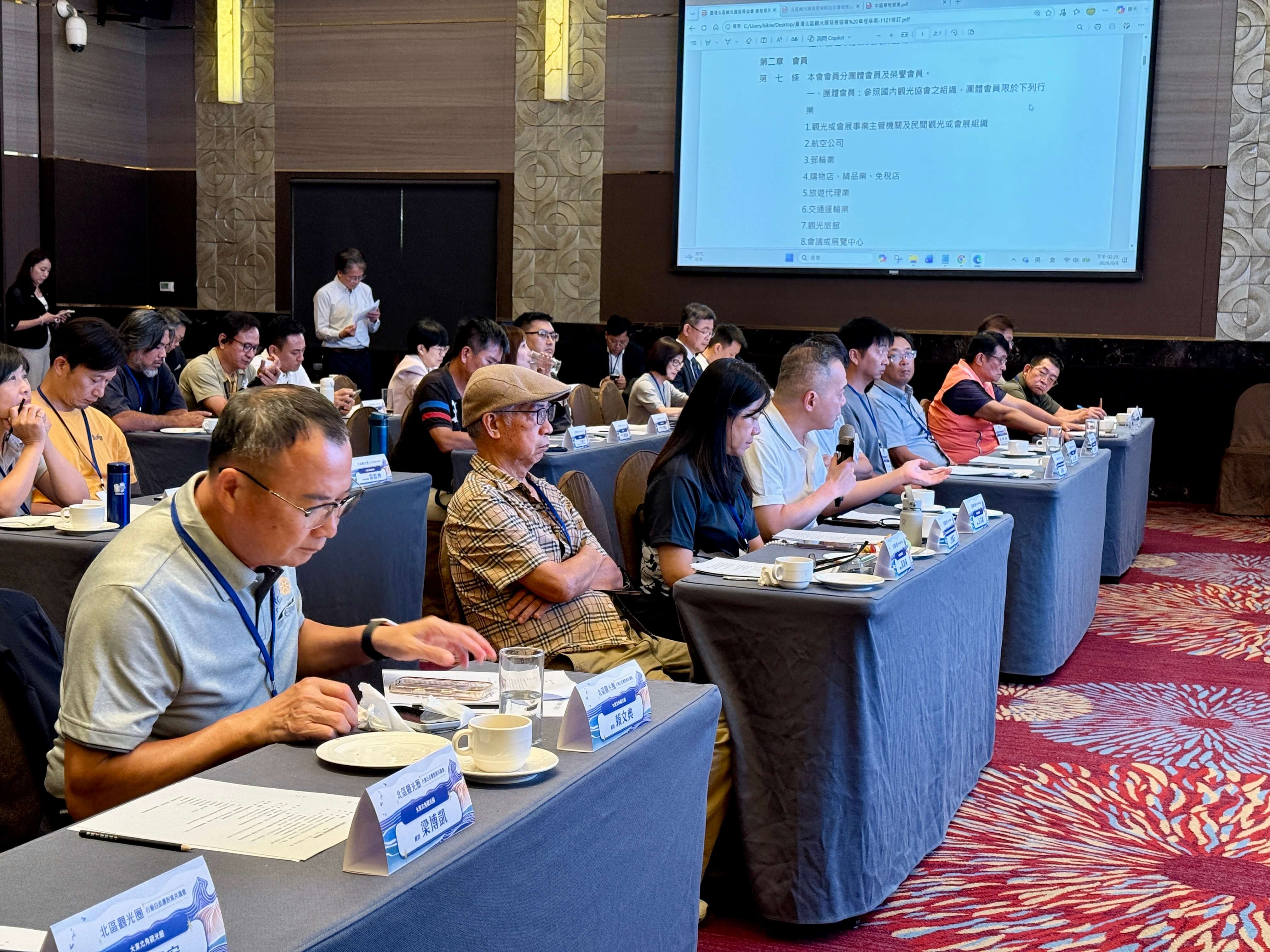
To strengthen the regional integration of tourist areas in northern Taiwan and to enhance their international visibility, the Tourism Administration (under the Ministry of Transportation and Communications) combined the Great Northeast Tourism Union, Crown Coast Tourism Union, and Matsu Tourism Circle into the Northern Taiwan Tourism Cluster. To collectively respond to structural changes in the global tourism market, the Northguan Scenic Area Headquarters held a consensus-building meeting on August 4 to discuss the strategy and action white paper for the Northern Taiwan Tourism Area Development Association. Bringing together local industries to identify practical priorities from the ground up, the meeting participants jointly drafted the association’s charter, marking a new phase in northern Taiwan’s tourism strategy: the establishment of a formal organizational platform capable of facilitating international business-to-business (B2B) partnerships.
The meeting informed that the Northern Taiwan Tourism Cluster would not replace existing organizations but instead clearly define the complementary strategic roles of the three regions. The Crown Coast would serve as northern Taiwan’s international gateway and coastal harbor hub, welcoming international visitors and cruise passengers. It would work in conjunction with the Great Northeast Coast, which would offer well-developed mountain, sea, and railway tourism experiences as well as established sustainable tourism locations, helping extend visitors’ stays. The initiative would also connect the aforementioned destinations with Matsu’s distinctive military culture and immersive island experiences. By combining their respective strengths, the three regions aim to create a golden tourism corridor in northern Taiwan encompassing international gateways, mountain and coastal landscapes, and island culture.
The meeting also established a consensus on cooperation among the three tourism areas. Responsibilities will be divided according to each region’s resources and market conditions, with flexible, project-based roles assigned as needed and contributions recognized according to their actual impact to establish a long-term framework for shared prosperity. Beyond exploring northern Taiwan’s distinctive cultural and landscape assets and their long-term value, the initiative also plans to package locally unique geological landscapes and experiential activities into a standardized portfolio of tourism products that international travel agencies and online travel agencies (OTAs) can book directly. Cross-regional itineraries and marketing through distribution channels will also be promoted in the future.
In addition, the meeting discussed the Northern Taiwan Tourism Area Development Association’s priorities for its first year, including clarifying the relationship between the shared brands and individual brands of the three regions, identifying priority target markets, and facilitating personnel and expertise-related exchanges among the regions. These efforts will help put responsible governance and industry sustainability into practice across all areas. Guided by the principle of a mutually beneficial cycle in which ecological capacity, local economic benefits, and commercial value creation reinforce one another, the initiative aims not only to bring the world to northern Taiwan but also to help the region’s tourism industry shine in the global market.
大東北角觀光圈
皇冠海岸觀光圈
馬祖觀光圈